.jpg)

Why Phase 0 Exists, and Why We Start There
Product development has a tendency to become chaotic.
Different stakeholders bring different assumptions. Business pressure pushes for early certainty. Technical realities surface later than expected. Teams move forward with partial information because standing still feels risky.
This is not a failure of effort or intelligence. It is the natural outcome of trying to turn ideas into real products.
That is why disciplined product teams break development into phases in the first place. Here is our development approach at SGW.
Phases are not bureaucracy. They are a framework applied to a learning-driven effort. Each phase exists to reduce a specific type of risk, answer a specific class of questions, and generate information that defines what comes next.
But for that framework to work, there is one step that has to come before all others.
Why Product Development Is Broken Into Phases
In a structured development approach, each phase has a distinct purpose.
Early phases explore concepts and configurations before commitment. Middle phases test feasibility, architecture, and assumptions. Later phases refine designs, layer in manufacturing realities, and prepare for regulatory approval and production.
What matters most is not the names of the phases, but the sequencing.
Later phases should be defined by what is learned earlier. Planning for detailed development should be informed by concept work. Planning for manufacturing should be informed by real prototypes and validated assumptions.
This sequencing reflects an important truth.
You cannot responsibly define an entire development path up front, because learning is unavoidable.
Learning and Assumptions Are Not a Problem. They Are the Work.
It is best practice in product development to expect learning. Unexpected constraints surface. Interactions behave differently than anticipated. Early assumptions prove incomplete or wrong.
It is also best practice to challenge assumptions deliberately. Many successful products look meaningfully different at launch than they did at concept, not because something went wrong, but because teams learned what actually mattered.
These realities make it unrealistic to lock scope, cost, and timelines for an entire program before stepping into the work.
Phase 0 exists to make that first step intentional.
What Phase 0 Actually Is
Phase 0 is a focused discovery and definition phase that comes before committed design or engineering work.
The purpose of Phase 0 is alignment and disciplined assessment of the path ahead. Instead of jumping into execution, the team slows down just enough to ask the right questions while decisions are still inexpensive to change.
This short sprint consistently delivers outsized return because it replaces assumptions with evidence.
Across a wide range of product types, Phase 0 helps teams:
- Clarify who the product is really for and how it will be used
- Identify business constraints that must shape development from the start
- Eliminate features or concepts that are not financially viable
- Identify low-cost experiments to test critical assumptions
- Surface regulatory or compliance considerations early
- Align stakeholders before momentum locks in poor decisions
Phase 0 is not about designing the product. It is about defining the problem space clearly enough that design and development can proceed responsibly.
Typical Phase 0 Outputs
Phase 0 is not abstract thinking. It produces concrete outputs that directly inform later phases.
While details vary by product, Phase 0 commonly delivers:
- Use case documentation and a requirements matrix
- Product feature capture and a preliminary product specification
- Early insight into system architecture, controls, or software needs
- A compatibility or integration matrix where relevant
- A prioritized risk register
- An initial regulatory or compliance plan
- A Phase 1 plan and estimate
- An overall rough order-of-magnitude development estimate
These are not final answers. They are decision-making tools.
Their purpose is to allow later phases to be scoped with credibility rather than optimism.
Why Phase 0 Makes Development Faster, Not Slower
Phase 0 is sometimes perceived as overhead, especially by teams eager to see progress.
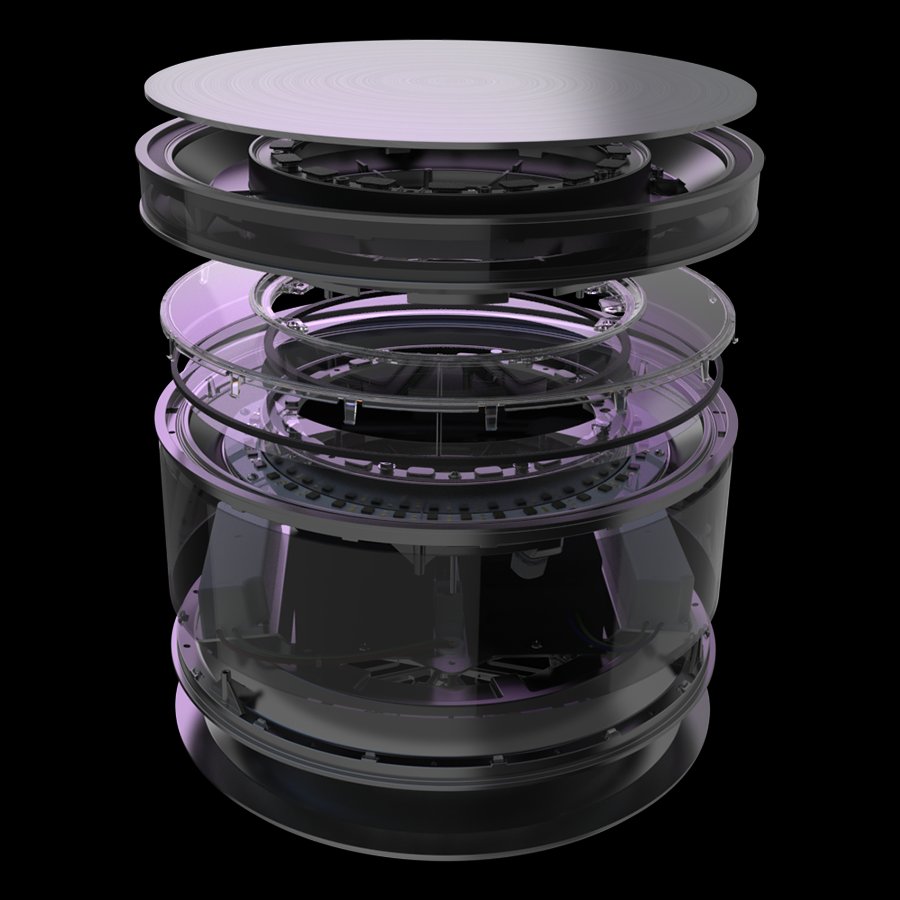
In practice, it shortens total development time and reduces cost. This is often where teams first uncover risks that would otherwise appear much later in development. We have seen this firsthand in projects like the Lighted Bollard Cover, where specific internal manufacturing constraints would drive the supply chain, and the design of sub-systems.
By identifying assumptions early, Phase 0 reduces rework. By aligning teams early, it reduces decision churn. By surfacing risk early, it prevents late-stage surprises that disrupt schedules and budgets.
Just as importantly, Phase 0 improves leadership decision-making. Proceeding, pivoting, pausing, or stopping are all valid outcomes when based on real information.
Skipping Phase 0 does not eliminate uncertainty. It just defers it to a point where change is more expensive.
Phase 0 Sets the Tone for the Entire Program
One of the most overlooked benefits of Phase 0 is behavioral.
It establishes that learning is expected. That plans evolve. That certainty is earned through evidence, not assumed at the outset. That each phase earns the right to define the next.
This mindset carries forward into every phase that follows.
In our experience across many commercialized products, the strongest outcomes come from teams that respect discovery and definition before execution. They move faster overall because they spend less time recovering from early misalignment.
Phase 0 is not about slowing development down.
It is about starting with clarity, discipline, and intent.
What This Means If You Are Early in Development
If you feel pressure to lock scope, cost, or timelines before you have worked through key assumptions, that pressure is a signal. We've written about this before here.
A well-run Phase 0 is often the most cost-effective step in the entire development effort. It ensures that when execution begins, it begins in the right direction.
Phase 0 does not eliminate uncertainty. It makes uncertainty manageable.
And that is what allows product development to succeed across a wide range of products, industries, and contexts.