Height-Adjustable Stool for Surgeons: Class I Medical Device
Design development, engineering, and manufacturing startup for a innovative medical device
SurgiStep by Smart Step Surgical
2025
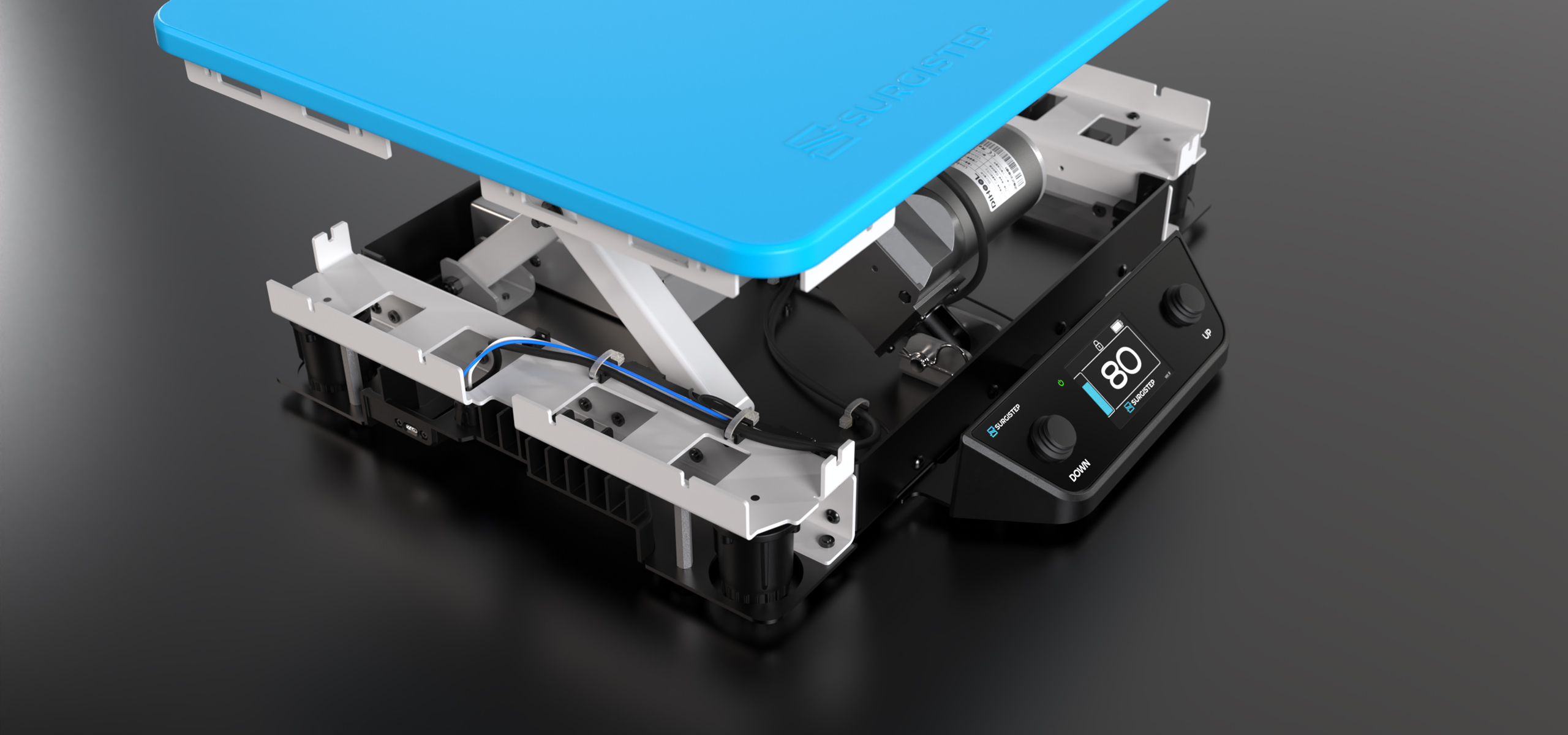
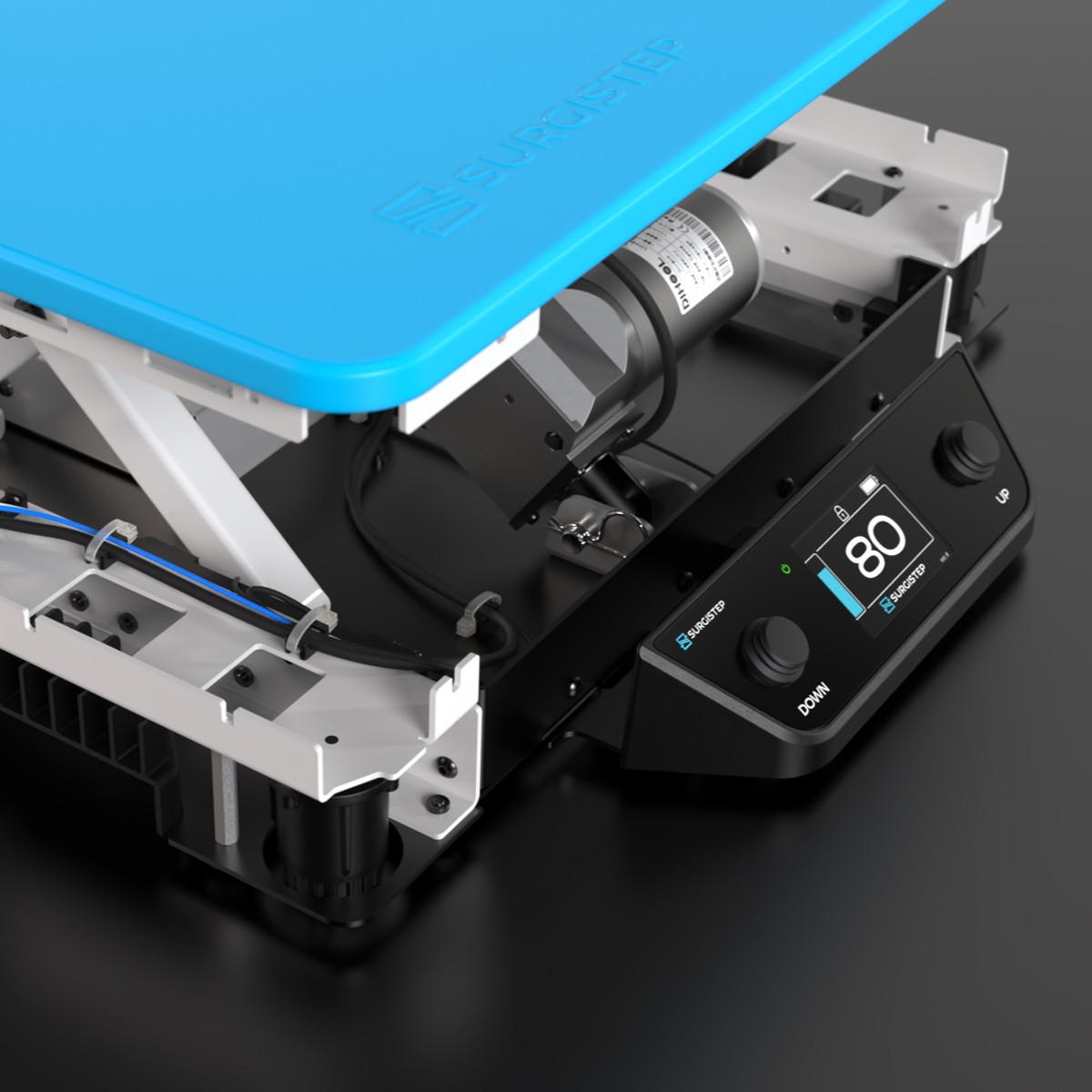
Smart Step Surgical partnered with SGW Designworks to transform SurgiStep from an early design into a production ready, height adjustable surgical platform designed for use in operating rooms. SGW led mechanical, electrical, firmware, and user experience development, validated the design with surgeons, and guided the product through design for manufacturability and supplier engagement. The result was a Class I medical device ready for scalable manufacturing and commercial deployment.
Product Vision
Transform an early surgical platform concept into a production ready Class I medical device that delivered precise height adjustability, intuitive operation, and all day reliability in demanding operating room environments.
Smart Step Surgical came to SGW Designworks with a clear clinical problem and early technical momentum. The team had already developed an initial vision for the product, a product requirements document, and initial specifications. Their goal was to take SurgiStep from an early proof of concept to a fully manufacturable, commercially viable Class I medical device.
The core problem SurgiStep was designed to solve is common in operating rooms, particularly in pediatric neurosurgery. When multiple surgeons or surgical staff of different heights need to work simultaneously over a patient, traditional solutions rely on stackable plastic step stools. These stools typically come in fixed height increments, often eight inches, and can be stacked to increase height. In practice, this creates instability, limited adjustability, and poor ergonomics, especially when finer height control is needed.
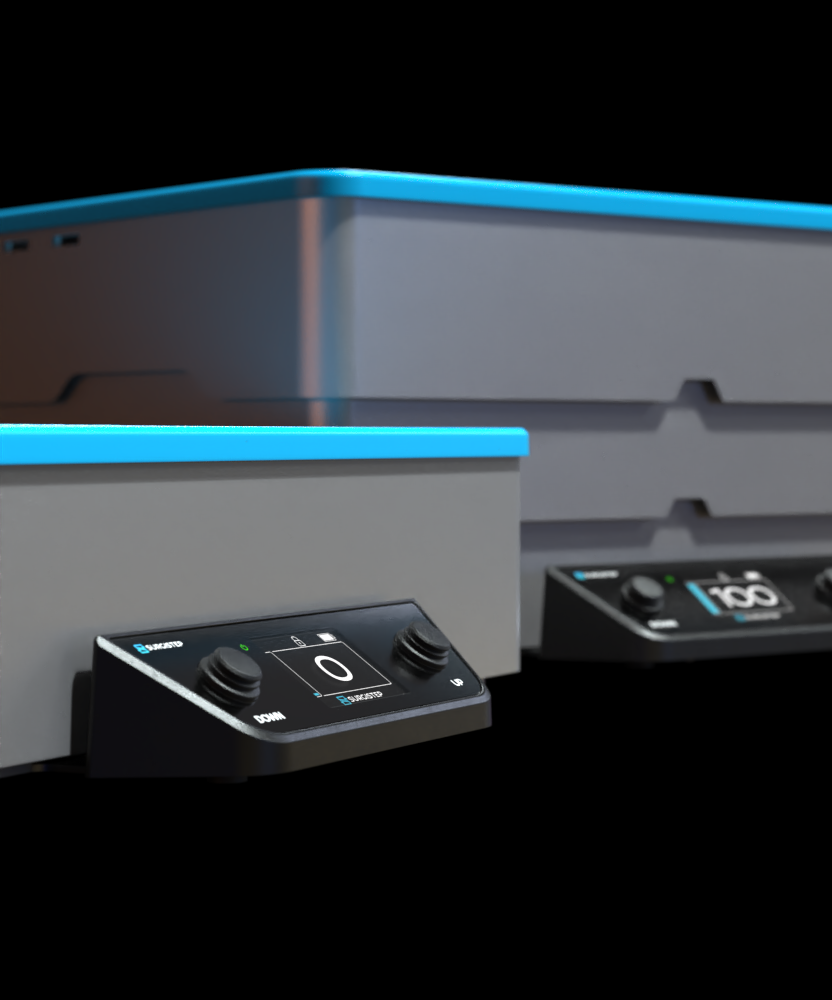
Smart Step’s vision was a powered, height adjustable surgical platform that could provide a much broader and more precise height range while remaining stable, easy to clean, and safe for use in sterile operating environments. The platform needed to be compact when collapsed, extend to approximately one foot in height, and support smooth lateral movement so it could be repositioned without being handled by hand. At the same time, it had to lock firmly in place under load.
From a systems perspective, the product needed to be battery powered, capable of lasting through multiple surgical procedures in a full operating day, and compliant with Class I medical device constraints. Beyond the mechanical and electrical requirements, user experience was critical. Surgeons needed intuitive controls, clear feedback, and confidence that the device would behave predictably in a high pressure clinical setting.
SGW’s challenge was to take an already ambitious concept and refine it across mechanical design, electronics, firmware, user experience, industrial design, and manufacturing, while managing regulatory risk and hitting realistic cost and production targets.
Final Outcome
A multidisciplinary development effort that integrated mechanical design, embedded systems, user experience validation, and manufacturing execution to bring SurgiStep from prototype to scalable production.
SGW Designworks assembled a multidisciplinary team that included mechanical engineering, electrical engineering, firmware development, industrial design, user experience, and manufacturing support. The project moved forward through tightly integrated development, with each discipline informing the others as design decisions evolved.
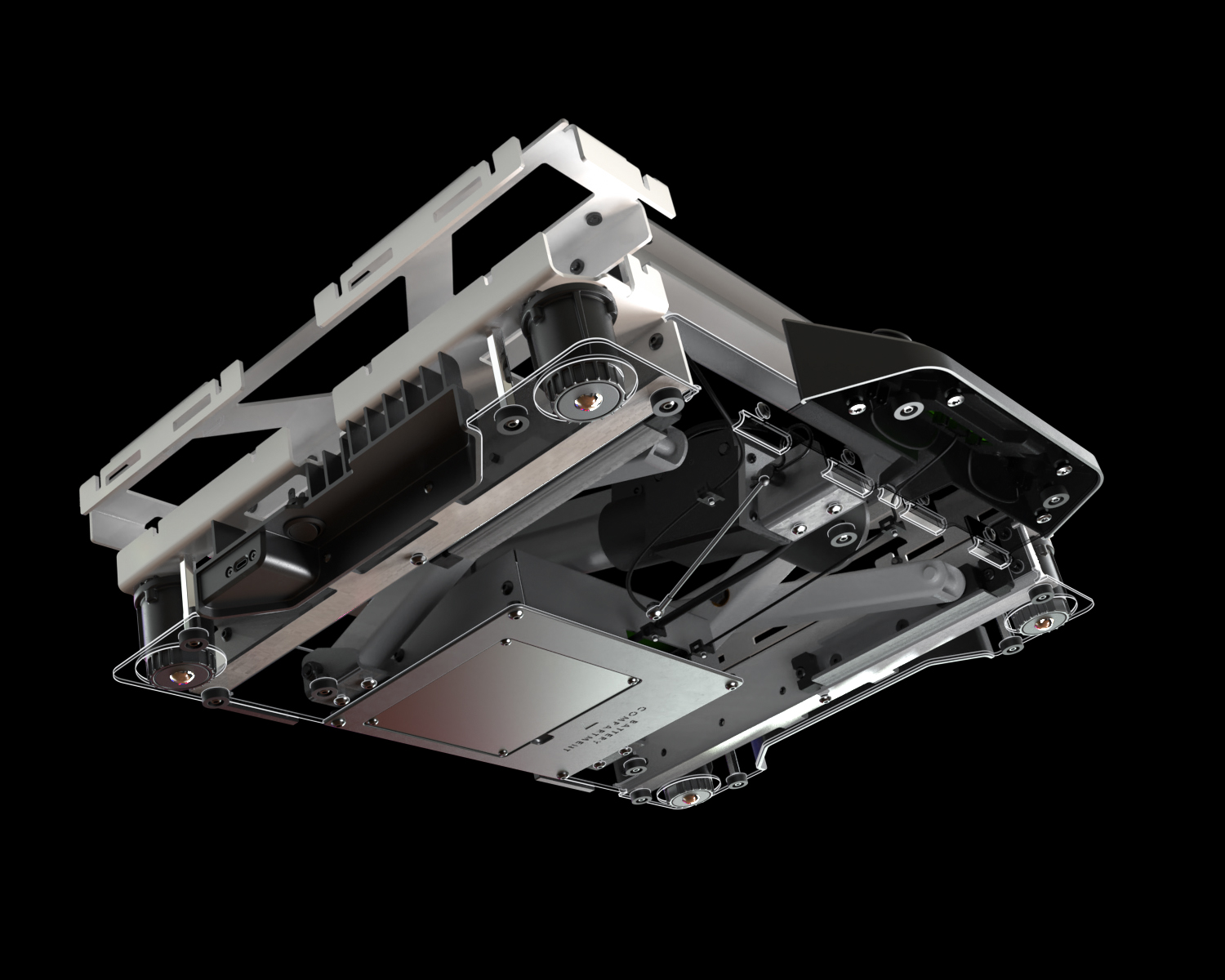
Mechanically, SGW evaluated multiple lifting approaches early in the project before retaining and refining a scissor lift based architecture that aligned with existing development work and known market benchmarks. The team engineered the internal lifting mechanism, load bearing structures, and telescoping exterior panels that protect internal components while allowing for easy cleaning and sterilization. Significant effort went into balancing collapsed height, extended height, stability, and manufacturability, with early prototypes used to validate geometry, weight capacity, and motion.
On the electronics and firmware side, SGW defined the full system behavior around battery powered operation. This included battery selection appropriate for a medical environment, power management strategies to support full day use, sleep states to extend battery life, and clear user feedback for charging and operational states. User flows, wireframes, and state based behavior were developed and refined through iterative prototyping and testing, forming the foundation for robust firmware implementation.
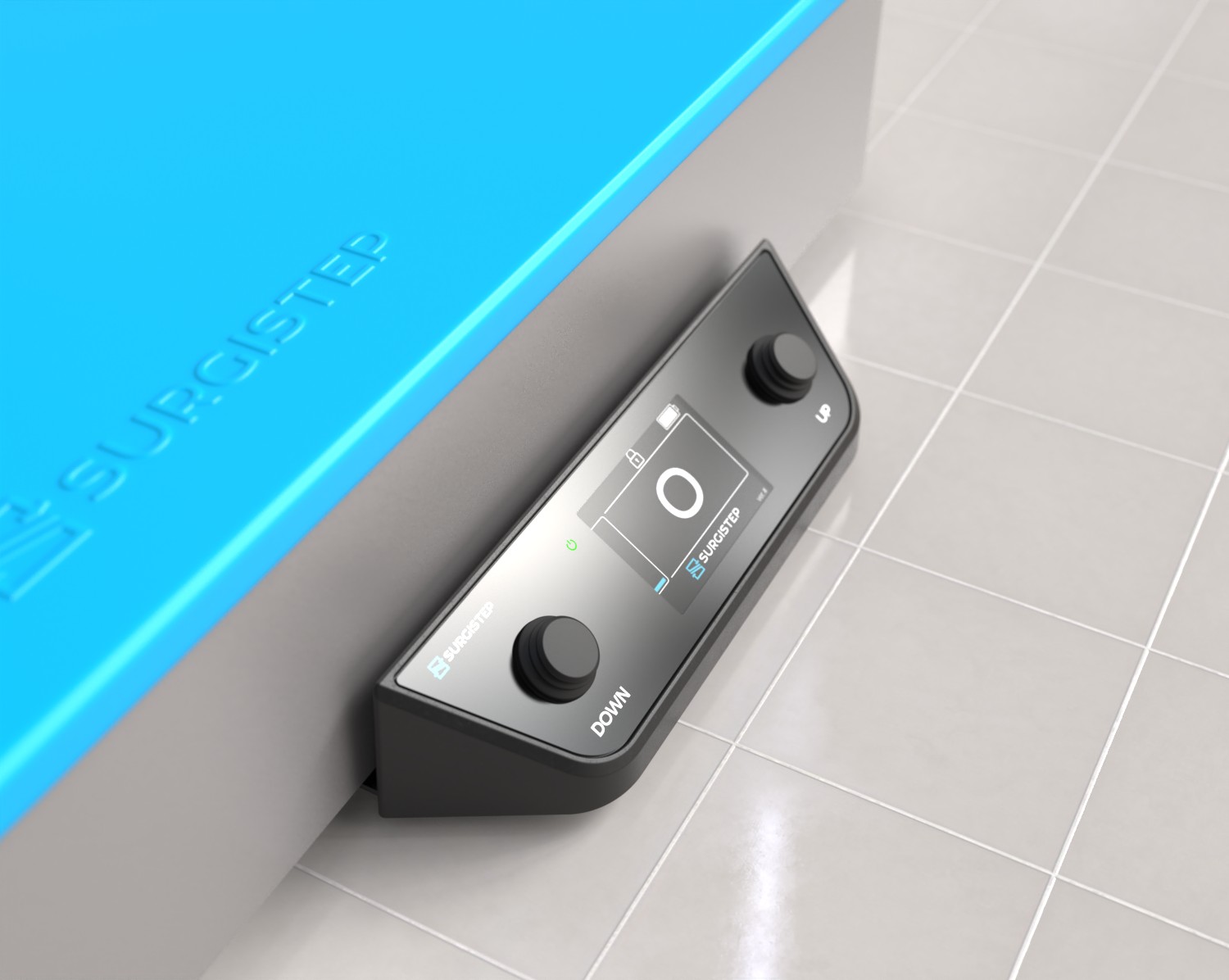
Industrial design work focused on integrating the mechanical system into a clean, professional form factor appropriate for surgical environments. Color, material, and finish decisions were refined to match SmartStep’s brand vision while ensuring durability and cleanability. The human machine interface (HMI) was intentionally kept simple, with careful attention to button placement, screen graphics, and visual feedback that could be quickly understood in an operating room.
User experience validation played a key role in de risking the design. SGW conducted structured usability testing sessions with surgeons, including in person evaluations that assessed mobility, control placement, actuation forces, screen feedback, and overall interaction. Feedback from these sessions directly informed design refinements and helped resolve ambiguous or high risk feature requests. In one notable example, early concepts for modular side platforms were evaluated and ultimately replaced with a wider main platform to reduce safety and regulatory risk.
As the design matured, SGW transitioned the product from prototype assemblies to a production ready system. Detailed design for manufacturability (DFM) packages were developed and sent to multiple contract manufacturers across the United States and internationally. SGW supported quoting, cost negotiations, and supplier selection, ultimately helping SmartStep engage a manufacturing partner that met both cost and quality requirements.
SGW also supported downstream needs beyond core engineering. This included high fidelity renderings used for investor and surgeon engagement, print collateral, early packaging considerations tied to regulatory requirements, and guidance on logistics decisions that affected product architecture, such as battery shipping and installation strategies.
The final result was a production ready SurgiStep platform that met clinical needs, addressed real world operating room workflows, and was ready for scalable manufacturing. The project exemplifies SGW Designworks’ ability to take complex, multidisciplinary medical hardware from early concept through validated, manufacturable reality while maintaining focus on user experience, safety, and long term product viability.
What the client said.
|
Discover more projects of ours.


5G Vehicle Router


Slow To Market


Key Features Missing

Bad User Experience

Constrained Product Roadmap

Lack of
Innovation

Meet with us
Discuss your current development projects, approach, team, and goals


Get tailored development help
Project help or dedicated capacity by discipline

See results
Realize the benefits of an award winning team focused on your project
