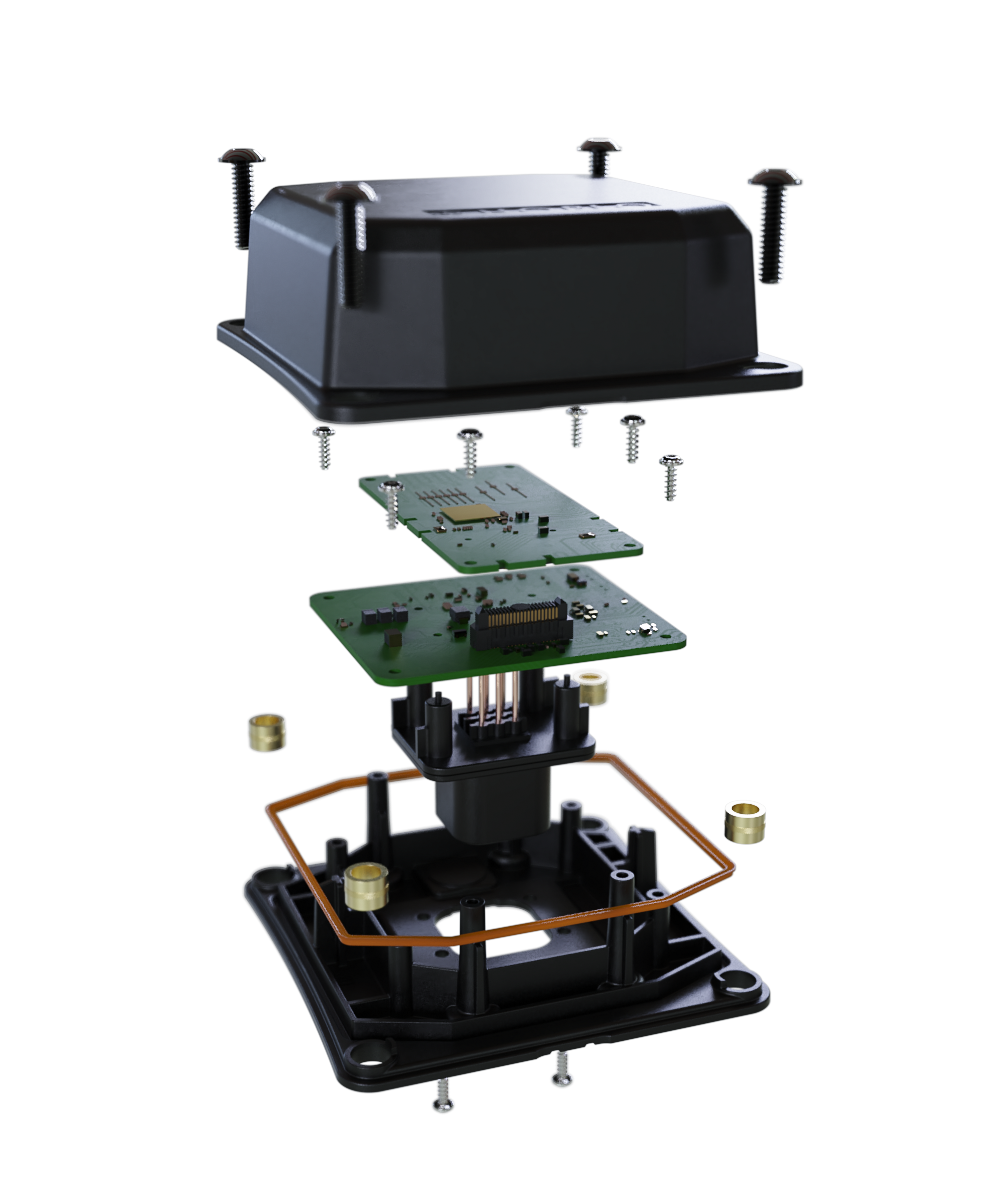


What goes into a radome
- Material selection for RF transparency, UV, and impact
- Wall thickness and geometry relative to the antenna
- Sealing between the radome and the housing
- Mounting and alignment features that hold the sensor's position
- Colors and finishes that do not degrade the signal
Designed with the electronics
Radome decisions depend on antenna placement and board layout, so we work closely with electrical engineering teams on keep-out zones and RF mitigations. Many radar products are sealed and outdoors, so radome design connects directly to enclosure sealing and thermal management.
Testing radar products
Validating a radar product takes a controlled RF environment. We also design RF and millimeter wave test chambers for repeatable testing in a compact footprint. Radome design is part of our RF product engineering services.
Frequently asked questions
What materials work for radar radomes?
Many radomes use engineering plastics selected for their dielectric properties, UV stability, and impact resistance. The right choice depends on operating frequency, environment, and cost.
Do you design the radar antenna or electronics?
Our focus is the physical system: radome, enclosure, mounting, and thermal design. We work alongside your RF and electrical engineers on layout constraints and integration.
Can paint or coatings be used on a radome?
Sometimes. Some coatings, especially metallic paints, can degrade performance. We evaluate finishes with RF performance in mind.
Do you build radome prototypes?
Yes. We build prototypes for RF, environmental, and field testing and refine the design based on results.

Related capabilities
Meet with us
Discuss your current development projects, approach, team, and goals

We'll propose the initial step
Our team defines the first body of work based on your business realities
See results
Realize the benefits of an award winning team focused on your project


